
In our previous blog, we explained why AI is an amplifier, not a quick fix. To quickly recap: if your foundation is messy, adding a bot will make the customer experience worse, not better. The logical next question is: how do you know if the foundation of your customer service is actually ready? And of course: how do you improve it?
Before you check out specific tools or software, take a look at how your team deals with incoming customer requests. You can tell a lot by how these are handled on a daily basis! Most service teams will evolve through three phases as time passes and their tools and processes improve. Finding out which one you’re in is the first step toward building a better system.
This is the reactive stage, where nearly all contact centers start out. You set up a phone line or an inbox, and you wait for requests to arrive.
Your team is constantly playing catch-up, reacting to whatever comes in, and success is measured only by how fast reps can close tickets. When you operate purely reactively, you are managing volume instead of shaping it.
After a while, you start organizing your channels, documenting your standard procedures, and introducing basic automation. This is what’s called the structured stage.
The problem is that these workflows are usually built inside-out. You build processes that suit your back-office, and then make your customers use them. This gives your team some breathing room, but it shifts part of the workload to your customer. And as we stated in our previous blog, customers want one clear entry point.
Once you start (re)building your processes and integrate the right tools, you enter the proactive or agentic stage. This is the model you want to work toward!
In proactive service, your system anticipates customer needs based on context instead of waiting for the phone to ring. You take an outside-in view and structure your operations around what the customer is actually trying to accomplish. Routine tasks are handled automatically, so your human experts can focus on complex cases that require an expert’s eye.
Once you know how mature your service organization is, you can start figuring out what’s holding you back from improving.
To find the bottlenecks in your service organization, we recommend looking at five areas that impact the customer experience:
Most companies list every available contact option on a single page. This forces customers to figure things out on their own, like a choose-your-own-adventure game. It overloads your channels, leading to high contact volumes and low resolution rates.
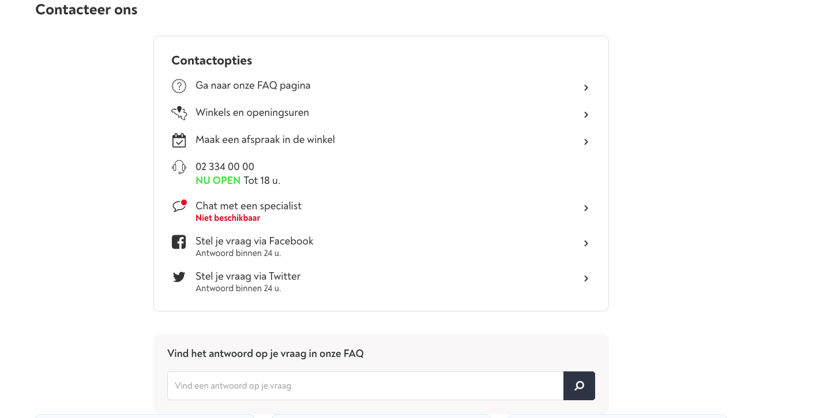
A mature setup uses an intelligent front door. Instead of showing a list of phone numbers and email addresses right away, you ask what the customer is trying to do first. Then, you guide them to the right channel based on that intent.
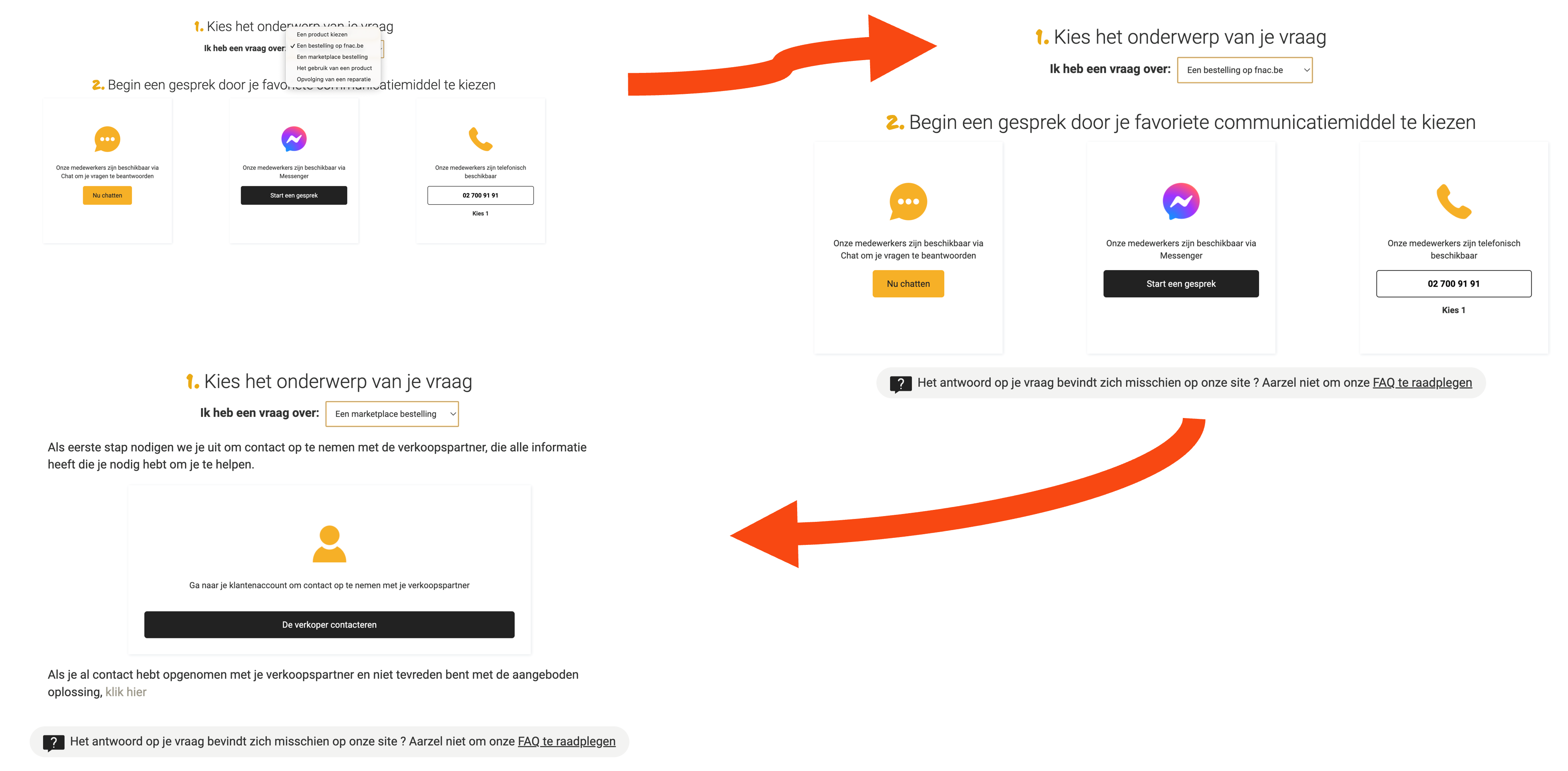
At the proactive level, the portal resolves the issue on the spot, turning traditional contact channels into a fallback option rather than the default.
In other words: how is your help center organized? If customers have to know your specific product categories or jargon to find an answer, you create friction and drive up your bounce rate. You’re basically making them navigate your internal org chart, and no customer is interested in doing that.
Grouping info by category makes this navigation better, but it’s still far from ideal.
A mature architecture is intent-centric: information is organized around verbs and actions, like "I want to cancel an order" or "track my shipment."
The search bar is often the starting point for your customers. If your site relies on exact keyword matching, any sort of typo (or even just using a different phrasing) will return zero results. Result: most customers just give up and call you instead.
A modern search experience uses AI reasoning to understand the meaning behind a question and delivers a direct answer.
At the agentic level, search becomes a conversation where the system asks necessary follow-up questions and connects to back-end systems to complete the request.
A great customer experience requires a great agent experience. If your experts have to switch between three disconnected systems to piece together a customer's history, they waste valuable time. The goal is to turn your agents from data searchers into problem solvers.
Start by setting them up with a workspace that offers a unified, 360-degree view of the customer. This already saves lots of time and prevents agents from getting distracted while talking to the customer.
At the highest level, your workspace should actively augment your experts by summarizing past chats upon arrival and drafting replies live. Less impactful for your customer, but a huge time-saver nonetheless. If you want to know what goes into building a unified tech stack like this, check out our strategic guide for service leaders.
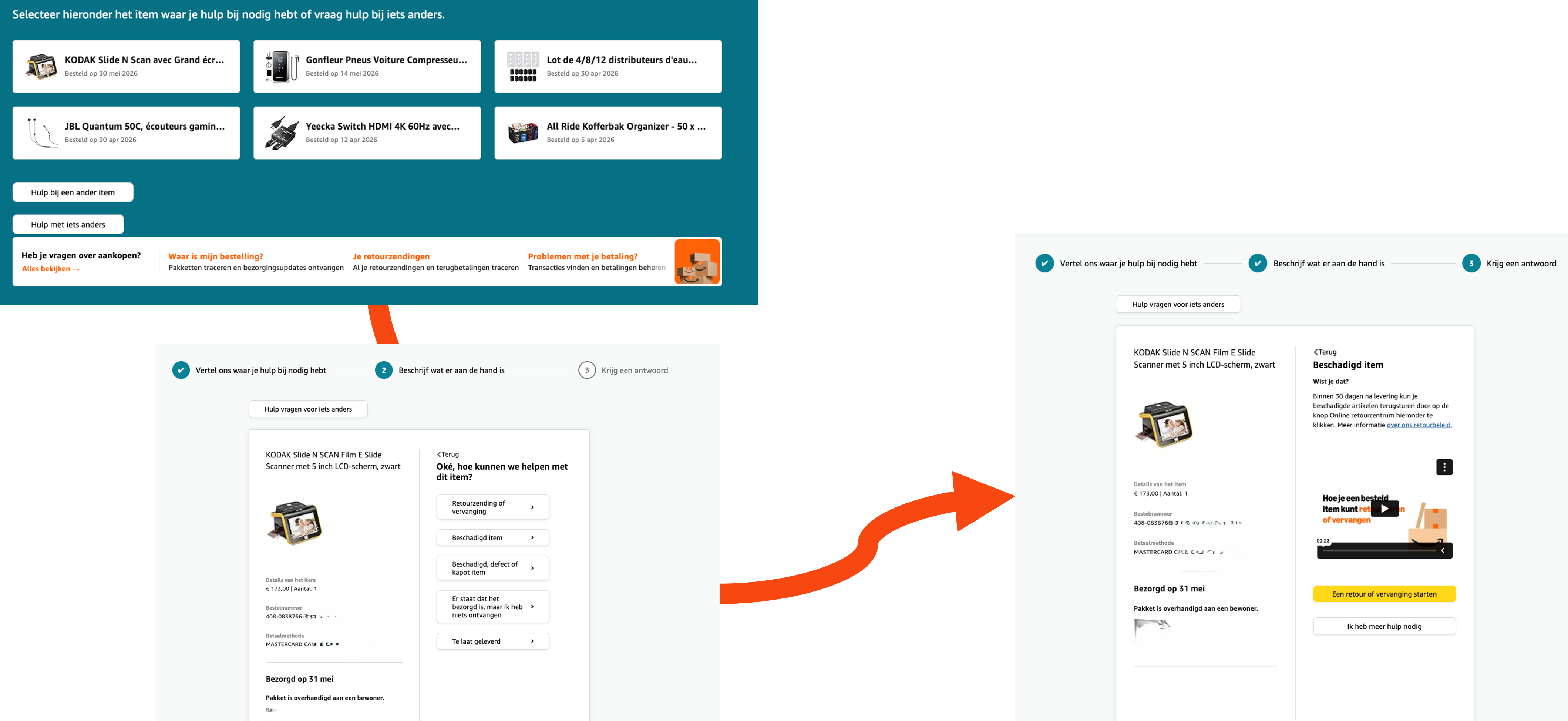
The basic form of customer service is returning a static knowledge article and letting customers figure it out from there. It’s basically a reading assignment, and the customer has to hope that the info is still up to date.
To see how this pillar should evolve, we can look at an example through the three As: Answer, Personalized Answer, and Action.
Once you’ve figured out where the bottlenecks are, it’s time to get started. You might feel overwhelmed at first, but the key thing to keep in mind is that you don't have to tackle everything at the same time.
In our experience, most organizations score reasonably well on one or two pillars, but lag behind on the others. The best approach is to identify your weakest link: the pillar with the biggest gap between where you are today and where you want to be. Focus your efforts there first, fix the foundation, and then move on to the next step.
Also, keep in mind that you don’t have to get to the agentic level for each pillar, at least not immediately. A little structure already goes a long way if you’re purely working reactively.
Need a hand figuring out how to proceed? Let's talk! We can help you map out your next steps.


